Thailand Tries to Project Normality

But unresolved grievances likely to impede efforts to end civil conflict.

Ryan Pierse / Getty Images (left); Vivek Prakash / Reuters-Landov

Former Thai prime minister Thaksin Shinawatra (left) and current Prime Minister Abhisit Vejjajiva.

Following a year of violent antigovernment protest and military backlash in Bangkok, and with elections likely soon, Prime Minister Abhisit Vejjajiva appears eager to show that Thailand is on the mend. In late December, the government lifted the state of emergency that had been in place in the capital for more than eight months, and Abhisit then gave an optimistic end-of-year speech promising stability. As one indication, the cabinet also lifted a much older state of emergency in three districts of Thailand’s troubled Deep South—where successive administrations have been unable to quell an insurgency that since 2004 has claimed more than 4,400 lives. “It shows that the government is making progress,” Abhisit said of the move.

Yet analysts familiar with the region, where parts of the Muslim and ethnic-Malay majority have long clamored for a political voice, say the conflict is far from easing. In fact, while violence in the three districts in question has traditionally been low, it has risen overall during Abhisit’s two-year tenure, according to analysts. “The violence isn’t down,” says Zachary Abuza, a professor at the National War College who has done extensive fieldwork in the area. “People just accept that violence as the new normal.”

The conflict has been simmering since 1902, when Thailand annexed what had historically been parts of the Kingdom of Pattani, but flared up in 2004 following the heavy-handed approach to the region by the then-prime minister, Thaksin Shinawatra. Insurgent demands now range from more political say to a fully independent state and implementation of Sharia.

Abuza says there’s no end to the conflict in sight: Thai authorities have yet to get a handle on what is a hard-to-pinpoint, low-grade insurgency that has no clear-cut message, central command, or even identifiable leaders. Harsh military and police tactics, meanwhile, such as detaining suspected insurgents without charge and allegedly using torture, seem only to make things worse. And even lifting the state of emergency represents no significant policy shift—many of the measure’s stipulations remain in effect through the Internal Security Act. Conventional wisdom holds that the government must settle its problems in Bangkok before it can properly address the trouble in the South.

The core issue is legitimacy, says Duncan McCargo, a professor of Southeast Asian politics at the University of Leeds. Thailand’s government is extremely centralized, with even regional governors appointed by Bangkok, where the military and monarchy sit. In the South, many residents feel estranged from the power structure, and the notion has been exacerbated by the military presence and decades of neglect. The red-shirt protesters who occupied part of central Bangkok for two months last year were supporters of Shinawatra, a populist billionaire who went into exile after being deposed in a 2006 military coup—and was the first prime minister to begin shifting some power from Bangkok to the country’s North, which is his base. “What you see in the Deep South is just an extreme version of the national problem in Thailand, which is that power is overly concentrated in Bangkok,” McCargo says. The red shirts took to the streets again in the capital this month following the lifting of the emergency decree.

Devolution of power is the only long-term answer, both in the Deep South and countrywide, according to Michael Montesano of the Institute of Southeast Asian Studies in Singapore. Yet the controversial subject is unlikely to be broached any time soon: the Bangkok elite are reluctant to cede real power, while Abhisit’s government is backed by Thailand’s most centralized powers—the military and the crown. “It would be hard to do this even if there weren’t a political crisis,” says Montesano. Until the country’s leaders are willing to address the longstanding grievances held by Thais outside the traditional power structure, unrest, both in the South and in Bangkok, will likely continue to be the norm.

PM optimistic detained Thais will be freed by Cambodia; urges army chief to be patient

The image “http://mcot-image01.mcot.gtis.co.th/content/images/stock/image_201101151737268940442F-D4A4-B760-60A1B36FDCE174B7.jpg” cannot be displayed, because it contains errors.

BANGKOK, Jan 15 -- Prime Minister Abhisit Vejjajiva said Saturday he is optimistic that all seven Thai detainees being held in Phnom Penh will be free on bail soon, yet urged army chief Gen Prayuth Chan-ocha to both use restraint and speed up the process of resolving border problems with the neighbouring country amid slanders by the so-called Thailand Patriots Network (TPN) group.

The group said that senior Thai military officers were somehow profiting from the border troubles and the slow action in helping the detainees.

“I understand the army chief’s feeling," the prime minister said."I wish to ask him to be patient.”.

On Friday, TPN activists rallied at Thailand's defense ministry, calling for the resignation of the prime minister, Foreign Affairs Minister Kasit Piromya and Defense Minister Prawit Wongsuwan.

They charged that senior military officers chose to stay idle regarding the jailed Thais as they believed the seven were on Thai soil when they were taken into custody by the Cambodian authorities and that several Thai military officers had received payoffs on the border.

Urging Gen Prayuth to be patient, Mr Abhisit said he had ordered Defense Minister Gen Prawit to help resolve the problem of Thai villagers who have rightfully possession of land deeds, but work near the disputed border. The prime minister was responding to concerns that the border problem might affect Thailand’s sovereignty.

Asda Jayanama, the new chairman of Thai-Cambodian Joint Boundary Commission (JBC), went to Cambodia earlier this week for talks with his Cambodian counterparts on the border problem, said Mr Abhisit, adding that he was told the talks went smoothly.

At this stage finding ways to return the seven detainees is the most important issue, Mr Abhisit said.

The Thais were captured by Cambodian soldiers on Dec 29. At present, five are still in custody and have been denied bail by the Cambodian court while two, including Panich Vikitsreth, an MP representing Bangkok and member of the ruling Democrat Party, have been released on bail but are not allowed to leave the country, as they must attend court hearings when they take place.

Some Democrat MPs plan to go to Phnom Penh to visit Mr Panich. The prime minister, however, said he had instructed them to wait until the situation has improved as the Cambodian court announced Friday that the entire issue should be resolved in the near future.

Mr Abhisit said he hoped that the remaining five Thais would also be freed on bail as their lawyers are working to help release them. (MCOT online news)
From www.mcot.net

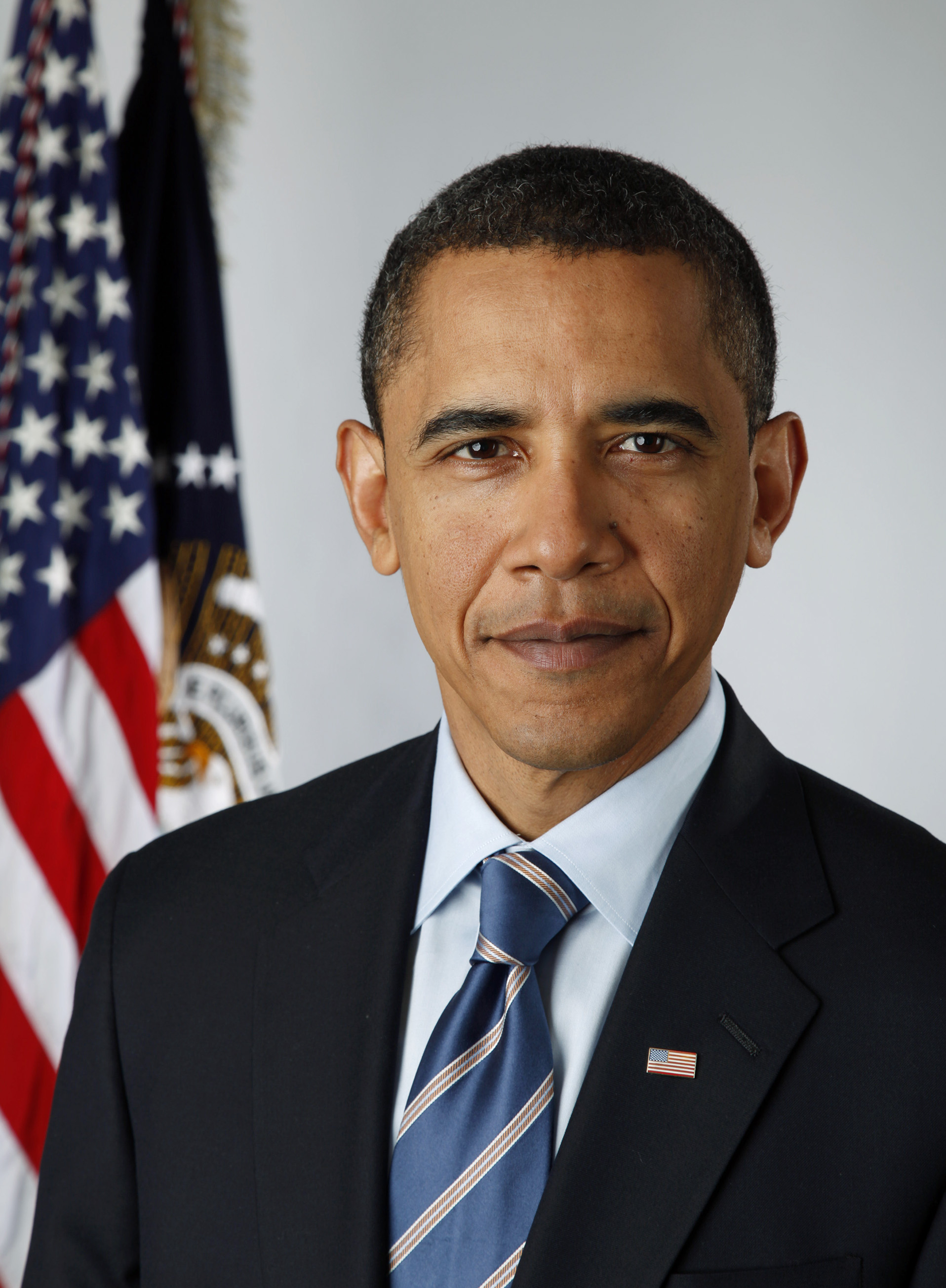
Obama readies new focus on education

http://upload.wikimedia.org/wikipedia/commons/e/e9/Official_portrait_of_Barack_Obama.jpg
WASHINGTON (AP) — President Barack Obama is putting education overhaul at the forefront of his agenda as he prepares for his State of the Union address and adjusts to the new reality of a divided government. But trouble signs are already emerging.

Despite a bipartisan consensus in favor of more flexibility for students and teachers, political pressures from the coming 2012 presidential campaign and disputes over timing, money and scope loom over a debate affecting millions — the overdue renewal of the nation's governing education law, known as No Child Left Behind.

For all the talk in Washington that education might offer the best chance for the White House to work with Republicans, any consensus could swiftly evaporate in the capital's pitiless political crosscurrents, leaving the debate for another day, perhaps even another presidency.

American parents, teachers and students would be left laboring under a burdensome set of testing guidelines and other rules that many agree are pushing standards lower instead of bringing them up. And frightening statistics would continue to pile up about how American students are being outpaced by their foreign counterparts in key areas like math and science.

It's that specter that Obama and members of his administration intend to use to try to marshal public support and spur balky lawmakers and quarreling interest groups into action against long odds.

"No one I'm talking to is defending the status quo," Education Secretary Arne Duncan said in an interview. "Everyone I talk to really shares my sense of urgency that we have to do better for our children. We're fighting for our country here."

Duncan said Obama's commitment to education reform will be reflected in his State of the Union address on Jan. 25. Obama has already spoken of the dangers to the U.S. economy and future competitiveness from lagging student test scores, and lawmakers and advocates will be watching closely to see whether he keeps the issue in the spotlight in the months ahead. They say aggressive advocacy from the president is key.

"I don't think there's any substitute but for him to be out front," said Rep. George Miller of California, top Democrat on the House Education and Workforce Committee.

Some in the GOP, wary of another giant bill like health care, would prefer a series of small measures to the sweeping rewrite of No Child Left Behind favored by the administration. Democrats and many outside advocates say Congress must enact any major education overhaul this year, before the 2012 campaign swings into gear. But some Republicans say getting it right is more important than getting it fast, and they refuse to spend any new money to do it.

"There's room to make cuts, and I think pretty substantial cuts, that would enable us to use some of those savings on things we think work," said Rep. Duncan Hunter, a California conservative who's the new chairman of an Education and Workforce subcommittee. "I like the piecemeal approach. ... If you do it in bite-size pieces, you can tell what needs to be tweaked as you go."

No Child Left Behind would not have passed without President George W. Bush's strong advocacy in the first year of his administration. In the years since, many Democrats and Republicans have concluded that the law failed to meet its overall objectives of raising student achievement, instead resulting in an over-reliance on test results and arbitrary measurements that don't help students learn. Yet no major rewrite of the law has happened since.

The Obama administration produced a framework for a new law last year that would soften many of No Child Left Behind's onerous testing requirements, put a new focus on teacher performance and the lowest-performing schools, and replace unwieldy proficiency requirements with loftier goals of boosting college graduation rates.

The document generated predictable controversy, but Duncan has worked painstakingly with lawmakers of both parties over the past two years to lay the groundwork for a reform bill. Republican and Democratic leaders of the education committees in the House and Senate say they want to move forward. "Everyone agrees this law needs reform," said Education and Workforce Chairman John Kline, R-Minn.

Obama focused on health care at the start of his administration, when Democrats controlled Congress. Now, after the November elections, Republicans control the House and are more powerful in the Senate and have the political capital to burn. It's not clear they'll be spending it on improving education, even if their committee leaders support it.

The "Pledge to America" the House GOP unveiled before taking power in the November elections never mentions the education. Brendan Buck, a spokesman for new House Speaker John Boehner, R-Ohio, said that Boehner's focus is on "addressing the top priorities of the American people — creating jobs and cutting spending.


British man in Cambodia charged with sexual abuse of 4 teenage boys

By: The Associated Press

PHNOM PENH, Cambodia - A British man in Cambodia has been charged with sexually abusing four teenage boys.

Sok Keo Bandit, a prosecutor in Siem Reap province, says Robert Layland was charged Tuesday with paying to procure a child for prostitution and indecent acts with a minor.

He alleges the 54-year-old Layland, who runs a souvenir shop in the province, had sex with four boys, ranging from 14 to 18 years old. He says the boys worked in Layland's shop.

The anti-child sex group Action Pour Les Enfants says Layland was arrested Monday. Layland is in custody and was not available for comment.

Cambodia has long been a magnet for foreign pedophiles, but in recent years has cracked down on offenders.

Siem Reap is popular with tourists for its Angkor temple

3 generations of women murdered in new multiple killing in Cambodia

Phnom Penh - Three Cambodian women from the same family were killed in their home in the country's second multiple murder in as many days, local media reported Tuesday.

Police said the three victims - 70-year-old Eng Ly, her daughter and her 20-year-old granddaughter - were killed early Monday in Siem Reap province in the country's north-west.

The attackers slit their throats after raping the youngest woman, The Phnom Penh Post newspaper reported.

The police chief of Siem Reap town said robbery was likely behind the killings.

'This is the cruellest murder I have seen since I became police chief over 10 years ago,' Thoeung Chantharith told the newspaper.

'We are working to find the perpetrators and bring them to justice,' he said.

A vendor discovered the bodies in the early morning as he delivered ice to the home where the family ran a small grocery business.

On Sunday, a Cambodian man was shot dead by police in the north-eastern province of Ratanakkiri after allegedly stabbing to death his brother-in-law and three unrelated children in two attacks.

Top Glove to invest RM160mil in Cambodian rubber plantation

KUALA LUMPUR: Top Glove Corp Bhd, the world's largest rubber glove manufacturer, is investing RM160mil in Cambodia to plant rubber trees to reduce its dependency on latex which is bought at market prices.

Chairman Tan Sri Lim Wee Chai said the company was targetting to obtain 20% of its latex requirement from the plantation over time.

“We have about 8,000 ha of net plantable land for rubber trees,” he said at a briefing for analysts and reporters on Top Glove's first quarter results ended Nov 30, 2010 here yesterday.

By owning its own rubber plantation, Top Glove would be able to mitigate the rising cost of buying latex at market prices in future.

Tan Sri Lim Wee Chai (right) says the company is targeting to obtain 20% of its latex requirement from the plantation. On his right is managing director Lee Kim Meow.

“We had to revise our rubber glove prices several times in the last quarter due to the volatility of latex prices,” he said.

The average latex prices rose by 57% from RM4.58 per kg in the first quarter of 2010 to about RM7.20 per kg currently.

Lim said about 80% of the company's profit was still in manufacturing latex glove.

Top Glove would focus more on producing nitrile gloves as they command better margins and were not subjected to the volatility in latex prices.

In its first quarter ended Nov 30, 2010, the group's production mix for nitrile was 7%, while its nitrile production for December last year stood at 10%.

“We have a large number of nitrile raw material manufacturers in Malaysia, so we have better cost advantages over China in terms of raw materials and labour,” he said.

“Because of the higher prices of latex glove, customers have kept their inventory levels at a minimum level,” he said.

For the first quarter ended Nov 30, Top Glove posted a 44.6% drop in net profit to RM36mil compared with RM65mil in the corresponding quarter a year earlier.

Revenue stood at RM491.5mil against RM472.3mil previously.

Lim said the company had exceptional sales up till the third quarter of last year, due to concerns of A(HINI) and other factors.

“This year will be challenging but we hope to do better than the previous financial year,” he said.

He added that the company was planning to size up by acquiring smaller rubber plants to improve on its economies of scale and synergy.

Lim said the company had RM343mil in cash reserves to undertake such acquisition activities.

“We are in talks with several parties and hope to secure a deal before year end or earlier,” he said, adding that timing of the acquisition was important.

Lim pointed out that this adverse situation of higher latex prices would possibly lead to further consolidation among the industry players,

“We are in a good position to further enlarge our business when opportunities arise,” he noted.

Top Glove currently has 14 plants in Malaysia, four in Thailand, and two in China, with a total capacity of 33 billion pieces of glove per annum, which is nearly one fifth of the world's demand.

Coming to terms with sadism

  • Bo Uce holds a picture showing Lah Sok; brother… (Francine Orr / Los Angeles Times)


An orphan of the Killing Fields of the Khmer Rouge struggles to overcome his anguish.

He spent much of his life consumed by what the three men on the screen before him had done.

He stared at the glossy, bloodshot eyes of the man in the middle, the one who had so casually demonstrated how he slit his victims' throats, who explained how his hand grew so sore he often switched to stabbing them at the base of the neck.

They were gaunt figures now, impoverished men trudging the rice ponds of northwestern Cambodia. They had agreed to confess their roles in the Killing Fields, first for a documentary film, "Enemies of the People," and then here, in a video conference with survivors in Long Beach.

Bo Uce, 39, listened to them explain that they had to obey orders or they too would be executed. He knew they would say this, and they were right. But it didn't matter.

Uce wasn't there to understand their rationale. Since landing in New Jersey as a 12-year-old refugee in 1983 and going on to graduate from Dartmouth College, he'd scoured history and psychology books and world literature to try to comprehend the sadism and indifference he'd witnessed as a child in Cambodia. He read "Crime and Punishment" three times to understand Dostoevsky's character Raskolnikov, who cooked up wispy moral justifications to murder a pawnbroker, only to careen through a whorl of anguish after the act.

Uce came out on this damp Sunday night to make sure these men didn't think time had diminished their deeds, even as they roamed free after taking part in an atrocity that killed more than 1.5 million people. He wouldn't let them escape their own anguish.

But he would try to escape his own.

Bo Uce was 4 in 1975 when the Khmer Rouge, with its deranged vision of communism, took power. It purged the country of teachers, doctors, lawyers and writers and forced the population into hard labor on farming collectives.

Most of Bo's recollections are far-flung moments he struggled to string into coherence later.

He couldn't recall his father, Kharn, but preserved a few warm memories of his mother, Lah Sok. When the family was forced into the reeducation camps, she worked the rice fields in a women's brigade within walking distance of Bo's children's regiment. When they could, he and his older brother, Roth, would sneak away to see her. She looked emaciated and tired.

Cambodia HIV and Aids treatment programmes threatened

Abandoned HIV-infected baby, Phnom Penh Nutrition Centre, 1999
Cambodia has cut its rate of new HIV infections, but must reduce its reliance on foreign funding

Health workers have warned that Cambodia's success in reducing its rate of HIV and Aids may be at risk.

The US-based Results for Development Institute says that prevention and treatment programmes are too reliant on overseas donors.

If that money stopped coming through, infections and deaths might rise.

Cambodia used to be the HIV blackspot of Southeast Asia - in the late 1990s there were 15,000 new infections every year.

But in recent years, Cambodia has been the star performer, where the rate of new infections has fallen to around 2,000.

The country is also renowned for its treatment programmes for HIV-positive people.

More than nine out of 10 patients eligible for anti-retroviral drugs are getting the medicine.

But there may yet be unwelcome twists in both those success stories.

Difficulties

Anti-human trafficking laws have resulted in the closure of many brothels.

That has made it more difficult to reach sex workers to encourage the use of condoms.

And the drug treatment programmes are almost totally funded by foreign donors.

Robert Hecht of the Results for Development Institute says that is an unhealthy position.

"Foreign aid is quite uncertain, hard to predict.

"Cambodia is in a position to manage the costs of its Aids programme because it has been successful in reducing new infections.

"It has a good opportunity to expand its share of the total funding pot and in that way reduce its dependence on the outside sources of financing," he said.

Mr Hecht says that gradually reducing donations would allow Cambodia to take more control of its HIV/Aids programmes.

The government has welcomed the report.It says it will help to "sharpen its strategies".

Rice Husks Provide Alternative to Chinese Coal in Cambodia

BY Jenara Nerenberg

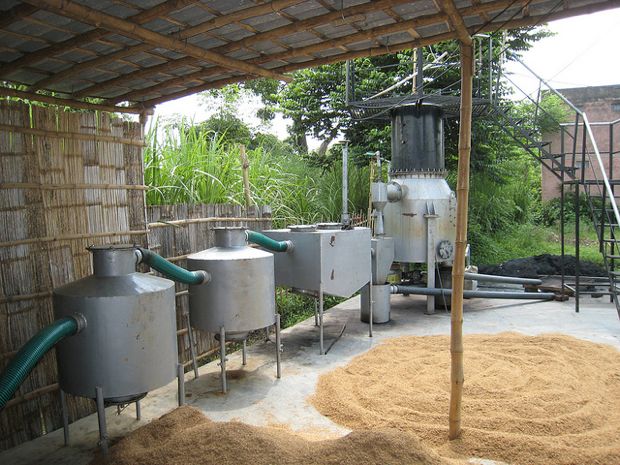
The Cambodian rice miller and exporter, Angkor Kasekam Roongroeung (AKR), is set to launch its rice husk-powered electricity generator at the start of next year, enabling the company to double its rice exports to 70,000 tons per year.

Electricity from the newly-built rice husk generator will be used to--you guessed it--process rice.

The plant comes with community perks, too. AKR will sell its excess electricity to nearby villagers at $0.22 cents per kilowatt, lower than the $0.27 per kilowatt price they would normally pay for power from the national grid.

“We will take this opportunity to process more rice for export in an attempt to help our rice producers earn more income,” said AKR director, Chieu Hieng, as reported by the Pnom Penh Post.

The innovative power source is a welcome addition. Cambodia spent $59 million last year importing electricity from Thailand and Vietnam and is currently co-constructing a coal-fired plant with China at a cost of $362 million. Concerns are being raised about Cambodia's increasing demand for power and the trend toward using eco-un-friendly coal-fired power.

And like other developing countries in Asia--such as Nepal, with its vast Himalayan-sourced rivers and significant dependence on Chinese and Indian investment--the natural resources for natively-generated power exist domestically, but the country lacks the necessary funds for infrastructure development.

Cambodia. Already, Golden Rice Cambodia is investing $2 million into a rice-husk power plant to power nearby mills. AKR's total cost for its plant was $6 million, including the land.

Man Jailed for Sharing Web Articles With Co-Workers

Charging someone with incitement for sharing web articles is a profound setback for free expression in Cambodia.

Phil Robertson, deputy Asia director at Human Rights Watch

(New York) - The Cambodian government's use of its new penal code against a man who shared web articles with his co-workers is a huge step backward for free expression in Cambodia, Human Rights Watch said today. The man was quickly convicted on incitement charges and sentenced to prison.

Human Rights Watch called on the Cambodian government to amend the penal code, which went into effect on December 10, 2010, to remove provisions that limit the peaceful expression of political views so that the law fully complies with international standards. "Charging someone with incitement for sharing web articles is a profound setback for free expression in Cambodia," said Phil Robertson, deputy Asia director at Human Rights Watch. "Cambodia's new penal code should have put an end to abusive practices, not encouraged new ones." On December 17, Seng Kunnaka, a Cambodian employee with the United Nations World Food Program in Phnom Penh, was arrested on charges of incitement under article 495 of the new penal code after he shared an article with two co-workers. While the contents of the article are unclear, it was printed from KI-Media, a website that publishes news, commentaries, poetry, and cartoons that are sharply critical of the government, including a recent series of opinion pieces lambasting senior officials regarding a border dispute with Vietnam. On December 19, the Phnom Penh Municipal Court hastily tried and convicted Kunnaka, sentencing him to six months in prison and fining him 1 million riels (US$250). December 19 was a Sunday, when the courts are normally closed.

During the last two years, more than 10 critics of the government, including journalists and opposition party activists, have been prosecuted for criminal defamation and disinformation based on complaints by government and military officials under the former penal code.

The new penal code places greater restrictions on free expression, Human Rights Watch said. Responding to media inquiries about the case, Cambodia's information minister, Khieu Kanharith, said: "Before, using the argument of ‘freedom of expression' and opposition party status, some people could insult anybody or any institution. This is not the case now."

"A dubious arrest so soon after the new penal code came into effect shows that the Cambodian government is ready to use its new legal powers to criminalize peaceful expression and political dissent," Robertson said. "And Cambodia's pliant courts seem all too willing to throw any perceived government critic in prison after a rushed trial." Under the new penal code, incitement is vaguely defined in article 495 as directly provoking the commission of a crime or an act that creates "serious turmoil in society" through public speech, writings or drawings, or audio-visual telecommunication that are shared with, exposed to, or intended for the public. It does not require the alleged incitement to be effective for penalties to be imposed, which include prison terms of six months to five years and fines. The new penal code also allows criminal prosecutions for defamation and contempt for peaceful expression of views "affecting the dignity" of individuals and public officials, as well as of government institutions. It makes it a crime to "disturb public order" by questioning court decisions. "The new penal code makes it more risky for civil society activists to criticize corrupt officials, police, and military officers who commit abuses or question court decisions," Robertson said. "This is particularly troubling in Cambodia, where the judicial system is weak and far from independent, with court decisions often influenced by corruption or political pressure." KI-Media is a controversial website that describes itself as "dedicated to publishing sensitive information about Cambodia." The website's editors, who have never publicly identified themselves, compile information from a variety of sources, including leaked and public government documents, Cambodian-language newspaper articles, and Chinese, Cambodian, and Western wire service reports. It also posts hard-hitting commentaries, blog articles, cartoons, and poetry from its readers - most of whom are sharply critical of the government.

Correction
The December 23, 2010 news release "Cambodia: New Penal Code Undercuts Free Speech" incorrectly noted that Seng Kunnaka's trial date was December 20. The trial actually occurred on Sunday, December 19. The news release also stated his date of arrest was December 18, when in fact, he was arrested on December 17. These dates have been corrected accordingly.

Followers

Related Posts Plugin for WordPress, Blogger...